Jararaca e Ratinho – Sapo no Saco

Some time ago, I had thought about posting a track from the legendary Native Brazilian Music 78rpm box sets which Columbia released in the United States (only) in 1942, but I was so sure they had been reissued on CD that I hadn’t even bothered to think twice about doing so. Recently, I woke up to the fact that not only does there not appear to be any plan to reissue these records on CD – one of the most historic sessions in the history of Brazilian music – but less than half of the songs recorded were even released in ’42. The detailed story of Native Brazilian Music is best told in the Stalking Stokowski article by Daniella Thompson. I will briefly run down the Cliff’s Notes version:

Famed conductor Leopold Stokowski considered himself a Brazilian music aficionado, and had expressed interest to composer Heitor Villa-Lobos that he’d wanted to produce a collection of authentic Brazilian popular music for American audiences. In 1940, Stokowski was to sail (with the All-American Youth Orchestra, whom he founded and conducted) to various ports in Central and South America, including Rio de Janiero, and asked Villa-Lobos to gather the best musicians he could find for a recording session – all expenses paid by Stokowski, of course.

While Stokowski certainly deserves credit for spearheading the session and presumably paying the engineer from Columbia Records who would record nearly 40 tracks in a marathon 24 hour session/party – the real credit goes to Villa-Lobos for gathering a wide variety of top-notch Brazilian musicians. On the two Columbia box sets there are macumbas, sambas, emboladas, corimas, and maracatu music, for example. The sets contained the only vocal recordings by samba pioneer Zé Espinguela, the first recordings by Cartola, Pixinguinha appears on flute, and most of the tracks were accompanied by Donga’s conjunto regional.

There were a few negatives, the most obvious being Stokowski’s insistance that the recordings be made not in Columbia’s local studio in Rio, but onboard the S.S. Uruguay, where Stokowski was staying. According to Thompson’s article, the Columbia engineer was not used to recording in such a place, and as such, I believe the recordings sound more than a little thin. Also, when the box sets came out, they were rife with errors: some performers went uncredited, only 3 had their names spelled correctly, only 6 titles out of 16 were spelled correctly, and the song orders were printed incorrectly on the labels (all of these are corrected in Thompson’s article). Musically, the stiffest moments are the two Amerindian chants sung by four professors at the Orfeão Villa-Lobos – while of historical import, they end the exuberant atmosphere of the previous 14 tracks with a formal austerity.

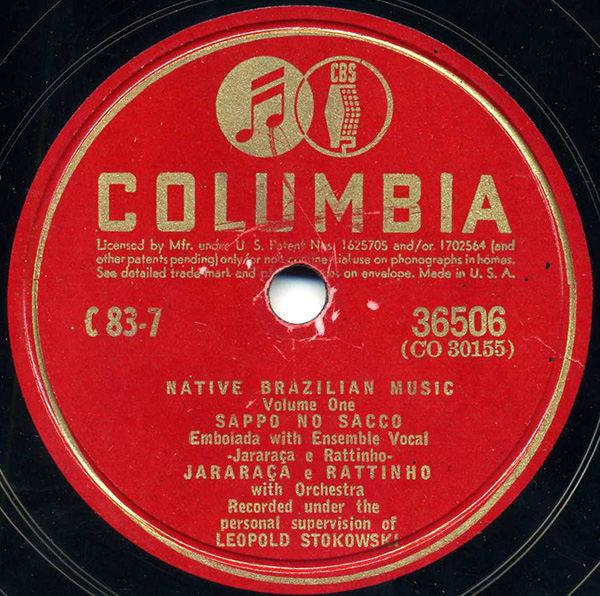
This track by comedians Jararaca (José Luis Rodrigues Calazans, 1896-1977) and Ratinho (Severino Rangel de Carvalho, 1896-1972) is an example of an embolada, a tongue-twister-like, fast-tempo song from Northeastern Brazil. 

Jararaca e Ratinho – Sapo no Saco

If you’d like to hear both box sets, this generous Brazilian blogger offers them in their entirety. They are straight dubs and not cleaned up, but they still sound nice!

ALSO: Many thanks to Matt at Matsuli for hosting my guest post of May 20. Over 100 people were able to download the 26 remastered African jive 78s in less than a day, which is completely fantastic.

Technical Notes
Label: Columbia
Issue Number: C-87, 36506
Matrix Number: CO30155

J. O. LaMadeleine (& Jeannette) – Petite Lili Valse

The last French Canadian folk music I posted was six months ago, so I thought I might feature another this week – especially since I found myself humming this song repeatedly. When that happens, I feel I have to go straight to the shelves, grab that piece of music, and remind myself of the innate qualities therein. This I did, and here it is for you, too.

Joseph Ovila LaMadeleine (1880-1973) was a left-handed fiddler based in Montreal, where he owned a music shop. In the late 1920s, when he was already nearly 50, he began his recording career for Starr Records. For the next 15 years on Starr, he recorded 54 records of wonderfully played reels, quadrilles, and waltzes like this track, which was recorded in the winter of 1937. While this tune is not a fiddle showdown like some of his others, I find it beautifully unpretentious, largely due to the vocal by his daughter Jeannette.

J. O. LaMadeleine (& Jeannette) – Petite Lili Valse

Starr Records got its name from the Starr Piano Company of Richmond, Indiana. The Starr Piano Company also produced a little label called Gennett, only one of the greatest, most sought-after record labels in jazz, country, and blues history. The Compo Company (run by the son of Emile Berliner) began pressing the Starr and Gennett labels in Canada in 1919, and gradually began recording as well. The Starr label continued into the 40s, long after Starr Piano left the record business, with the Starr label reserved strictly for Canadian recordings.

For more LaMadeleine, there is a track on the Rounder collection Raw Fiddle. You can also visit The Virtual Gramophone and hear quite a few LaMadeleine recordings, albeit at 64kbps. Better than nothing!

Lastly, an announcement for 1960s African music fans: very soon I will be writing a guest post over at the fine Matsuli Music blog. There will be LOTS to download, and it will be very limited, so if you don’t want to miss that, keep checking Matsuli.

Technical Notes
Label: Starr
Issue Number: 16066
Matrix Number: 7968-1

Seeranii – Dao-Thong, Pt. 2

Here is another relic from Southeast Asia in the days before the widespread use of the electric microphone. Voice and music emerge from a deep layer of surface noise. Such is the case with these early recordings: however tweaked and lessened by me, surface noise is inevitably an integral part of the listening experience.

In particularly hot and humid areas – perhaps Siam for instance, where this recording was made ca. 1927 – recording engineers would often have to pack their wax masters in dry ice to protect them from melting. Working without electricity…sometimes recording entire orchestras who played into a large horn…carting boxes of heavy equipment and hundreds of wax masters from place to place, perhaps country to country, for sometimes months at a time…the odds seemed against these expeditions. Yet many hundreds of thousands of records, perhaps even several million, were recorded all over the world before the microphone started appearing in recording studios in the mid-1920s.

Recording minutiae: originally, this selection was recorded by the Beka record label, and then released by Parlophon. Beka and Parlophon were German companies, owned by the larger entity Carl Lindstrom A.G., which was purchased by the British company Columbia in 1926. The smaller German companies under the Lindstrom banner operated independently of their British owners for several years, until Columbia/Lindstrom eventually fell under the banner of EMI, and Parlophon became known as Parlophone.

This is an example of Thai classical music, featuring a singer (Seeranii) and a small “phin-phaat” ensemble (also transliterated as “pii-phaat”), where a dominant instrument is the traditional Thai xylophone (the rānāt). You can also distinguish at least one Thai flute (the khlui), and in the distance (I think!), the classical Thai reed instrument, the pī nai. Thai classical music was originally developed as court music, and many of the instruments used date back 700+ years. The title of the piece translates to “Golden Star.”

Seeranii, with pin-part ensemble – Dao-Thong, Pt. 2

Many thanks to Philip Yampolsky for discographical insight, and to Pluethipol Prachumphol of the Antique Phonograph and Gramophone Thai Society for help with the translation. Thanks also to Lawrence Ross for additional information on Thai music and helpful translation.

Technical Notes
Label: Parlophone
Issue Number: 212
Matrix Number: 25701

Hadija binti Abdulla – Bina Adamu, Pt. 1

In previous posts, I’ve mentioned Robert Crumb’s volume of international 78rpm records titled Hot Women, which features female vocalists. On it, he included Part 2 of an exceptionally wild recording made somewhere in East Africa in the early 1930s. Today’s post is Part 1 of that fascinating record.

Decca Records in the United States began in 1934 (after truly beginning in England in 1929), and kept their maroon label for their international series. A large portion of the music released on that international series was from this hemisphere, but they did release some imported recordings, many of which were taken from German Odeon and Parlophon masters as the label indicates here. Most famously, American Decca found success in repressing Erich von Hornbostel’s influential “Music of the Orient” collection, which contained some recordings from as early as the ‘teens. You can still find a complete set if you’re patient. Much more difficult to track down, however, are examples from Decca’s African series.

Unfortunately, without a trip to a vault somewhere in Europe to dig through ancient paperwork (if it exists), and without a vintage catalog which might contain more information, there’s no way to tell where this record was precisely made. It could have been Kenya, it could have been Tanzania, Rwanda/Burundi, or Zanzibar. My best possible guess, considering the strong Arabic influence in the instrumentation (oud, violin, and percussion), is that it is taarab music from Tanzania or Zanzibar, but that is only a guess and nothing more. Or, might the two letter matrix code – BR – stand for Burundi/Rwanda? I’ve a very similar sounding 78 that is definitively from that particular region. But, who knows.

What I do know is that this vocalist will jolt you upright and rightly so. This is a one of a kind performance – just listen to her straining near the end of the piece.

Hadija binti Abdulla – Bina Adamu, Pt. 1

For more vintage taarab music from the region, definitely check out the beautiful CD Poetry and Languid Charm on Topic.

Technical Notes
Label: Decca (from Odeon masters)
Issue Number: 20140
Matrix Number: Br.O.77

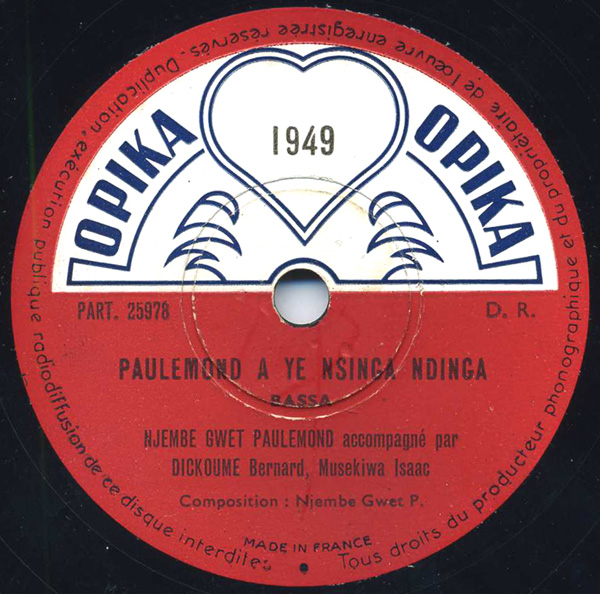
Njembe Gwet Paulemond – Paulemond a Ye Nsinga Ndinga

There are approximately 286 different languages spoken in Cameroon. It’s impossible to guess what percentage of those languages have been represented on vintage 78rpm records. Most of the Cameroonian 78s I’ve found have been in Duala language. Today’s post features some vintage African pop in the Basaa (or Bassa) language, which is actually spoken in greater numbers than Duala.

The label Opika was based in the Belgian Congo, and is equally as important as the Congolese labels Ngoma and Loningisa, and just as rewarding to track down. Amazing African pop, guitar, rumba, and ethnographic recordings from both Congo and Cameroon (as well as high-life in Ghana) were released on Opika. This small label was started ca. 1949 by two brothers from the Greek island of Rhodes, Gabriel Moussa Benetar and Joseph Benetar. The name “Opika” came from “opika pende” in Lingala, a phrase meaning “stand firm.”

It’s not clear from my research how long Opika lasted as a company, but probably not much further than the mid- to late 1950s. However, in a very brief period of time, they and their competitor labels left one of the most amazing musical legacies of Africa. These were small labels run by immigrants who truly enjoyed the region’s music. They wanted to fill a void, they wanted to record the best of a variety of local talent, and they succeeded (although it remains to be seen how much the artists were paid for their work). According to a quote from Rumba on the River, Gary Stewart’s fantastic history of Congolese popular music, 600,000 discs a year were being sold in the region in the early 1950s.

I could find zero information on Njembe Gwet Paulemond (or Gwet Paulemond Njembe, if you westernize the name), but the aforementioned Rumba on the River contains the best history written so far about those early years in Brazzaville/Kinshasha.

Njembe Gwet Paulemond – Paulemond a Ye Nsinga Ndinga

Technical Notes
Label: Opika
Issue Number: 1949
Matrix Number: Part 25978 (M3 164630)

Įdainavo Karalienes Aniolu Parapijos Choras – Loja Šunes Ant Kiemo

I think unaccompanied choirs are often ignored in non-classical 78rpm record collecting – they lack solo instrumental virtuosity, they tend not to be “raw,” and instead appear to be, at least on the surface, overly influenced by religion and/or western harmonic concepts. Even the choir records I have from Africa are probably less desirable, simply because they display the formality of a choir. Perhaps they are avoided for the same reason one might avoid records of British folk songs sung by a Folk Song Society.

While all these reasons are valid and make me ruminate far more intensely than I should, I actually enjoy a lot of choir music. It’s still folk music, and I just can’t seem to get rid of it, as I find unaccompanied folk singing to be sort of a wonderful act. Recently, a friend graciously gave me a stack of early Lithuanian records. I ended up discarding nearly all of the 30 or so records – except for the folk song choirs! Which were all recorded poorly on Columbia Records in the 19-teens. Totally unsaleable records! He must have pegged me as an easy mark.

I think of Ian Nagoski’s choice of including a recording of a Handel piece on piano smashed between 78s from Vietnam and Greece on his Black Mirror CD. Such seemingly radical sequencing suits me just fine – I believe there should be more of it, but maybe that’s the academic anti-academic taking hold. However, interconnectivity exists wherever you seek to find it. And maybe you’ll find something, as I did, in this Lithuanian Folk Song, recorded acoustically (and distantly) by Columbia in New York City ca. 1917, and performed by Brooklyn’s own Įdainavo Karalienes Aniolu Parapijos Choras. I had some difficulty translating the title, but I believe it’s something to the effect of “Dogs Barking on the Farm.”

Įdainavo Karalienes Aniolu Parapijos Choras – Loja Šunes Ant Kiemo

And if you enjoyed my December post on son huasteco music, Chimatli has a wonderful, media-filled post on the music. Check it out here!

Technical Notes
Label: Columbia
Issue Number: E3290
Matrix Number: 44619

Cheikha Djerba – Rah Alia Rah

There are two posts today (one musical, one visual), this being Excavated Shellac’s one year anniversary, for what it’s worth. Many more people have stopped by over the past year than I would have expected, and I appreciate that.

This post features another favorite type of music of mine: early Algerian raï. Raï is a major force in North African music today (I just combed through 5-10 current raï compilations at Amoeba Records this weekend), although musically it’s a shadow of what it used to be, nearly unrecognizable in comparison. Take a listen to the track samples on the Rough Guide to Raï, for instance, and for the most part you’ll hear what may sound ostensibly to Western ears like current North African pop music. Lyrically current raï departs from standard pop, but musically it’s undergone a renaissance. With one notable exception on the CD by the great Cheikha Remitti (1923-2006) who up until her death still sang the original raï, you will barely hear a glimpse of the hypnotizing rosewood flutes and older, raw voices found in early raï – which, as you can probably surmise, is barely represented on CD.

Raï means “opinion” or “advice” in Arabic – although I’ve read that it can sort of mean “Right on!” when exclaimed. The origins of the music converge in the 1920s-1930s in the seaside port of Oran, where rural bedouins and migrants brought their music into the city. Generally a male or female singer sang accompanied by only one or two gasba, the aforementioned desert rosewood flute, and a guellal, the Algerian hand drum. And raï’s vocals are intense: a driving, repetative lyrical force that sometimes lingers around a very narrow range of notes, which gives it the effect of a chant. What gave raï its reputation however was the way in which women, the Cheikhas, eventually popularized the genre in the mid-20th century, and the controversial subjects that they sang about. In much the same way that Greek rebetika music is known as the music of the Greek underworld, early raï is referred to as the music of Orani brothels and taverns.

Which is probably a narrow view, unfortunately. Raï music was obviously a far cry from classical Arabic music, and many singers sang about social issues, poverty, and the police – but there are raï songs about love, too. This piece, by Cheikha Djerba, recorded in 1954, is one of them. The title, “Rah Alia Rah” translates to “He’s Gone.” I quickly played this for a friend who is a native colloquial Algerian Arabic speaker and he was able to discern that it was sung by a woman who yearns for her husband, who has traveled overseas to find work.

Here are both sides of this record. Pathé gave us this recording a bit muffled for some reason (it’s not digital distortion), but it hardly distracts.

Cheikha Djerba – Rah Alia Rah

For more early raï, there are wonderful pieces by Cheikha Relizania on both R. Crumb’s “Hot Women” CD, and the Secret Museum’s North Africa volume. There were also several volumes made in France of a series titled “Anthologie du Raï” in the 1990s which seem completely unavailable – if you have any of these, please get in touch!

Also a great surprise, this fellow on YouTube plays a batch of classic raï from 45s, right on his record player for your eyes and ears.

Thanks to Karim B. for the translation!

Technical Notes
Label: Pathé
Issue Number: PV 477
Matrix Number: CPT 11644 (21) – M3-164009

Broke Down and Busted

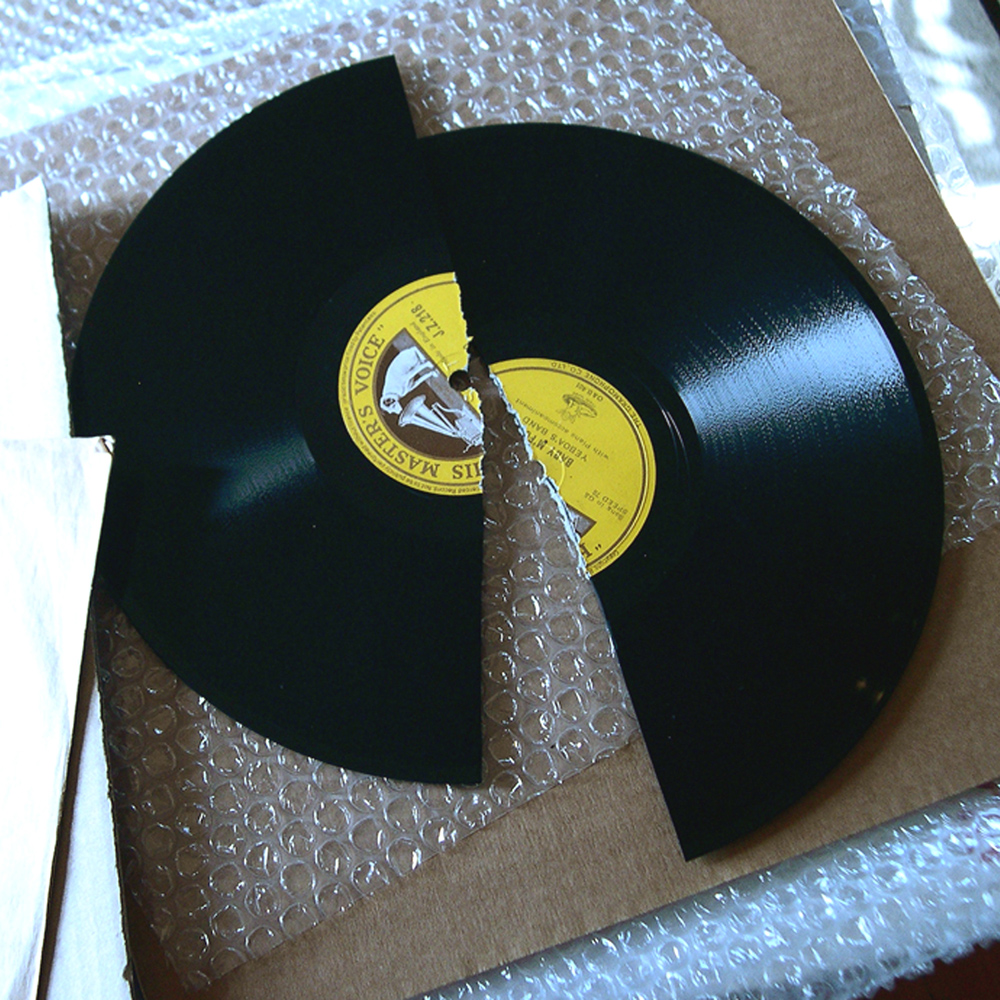
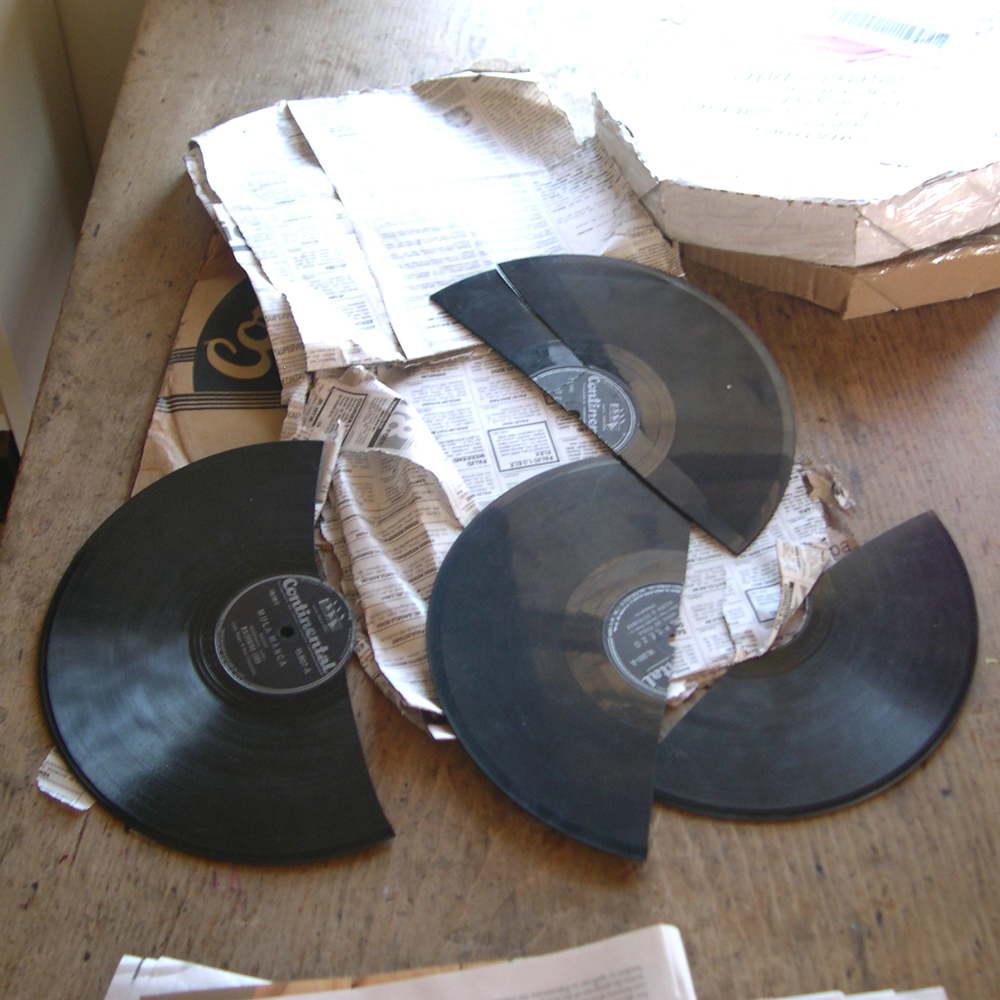
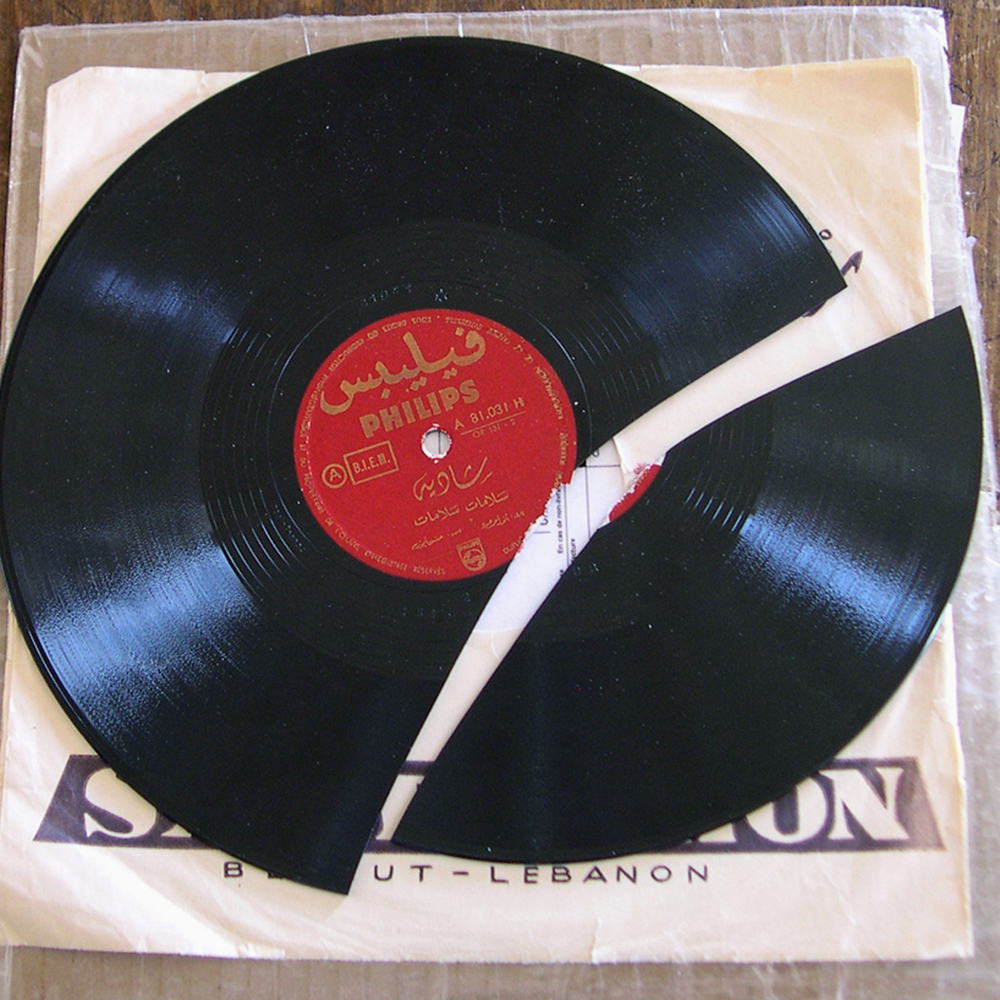
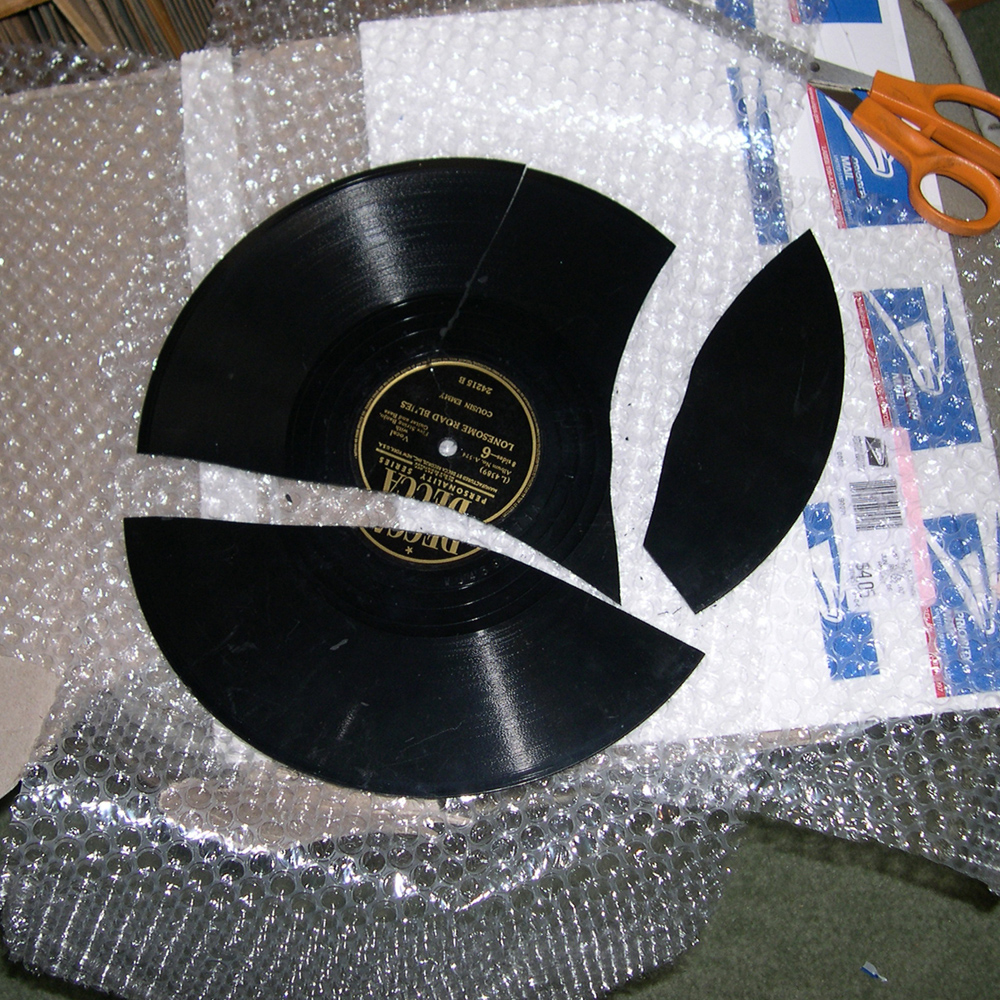
This is a gallery of photos featuring the broken records I have received over the past two years – a small percentage of the music that has arrived safe and sound. But still. Some aren’t that rare, some are quite possibly irreplaceable. There’s no point ranting about it again. The winner this year: the record that turned up in the mailbox wrapped once with a paper towel. This visual display should suffice in lieu of outward rage:


First row (l-r):
1. Auvergne cabrette solo, ca. early 1930s, hairline crack
2. Early West African high life, ca. mid-1930s, split in half
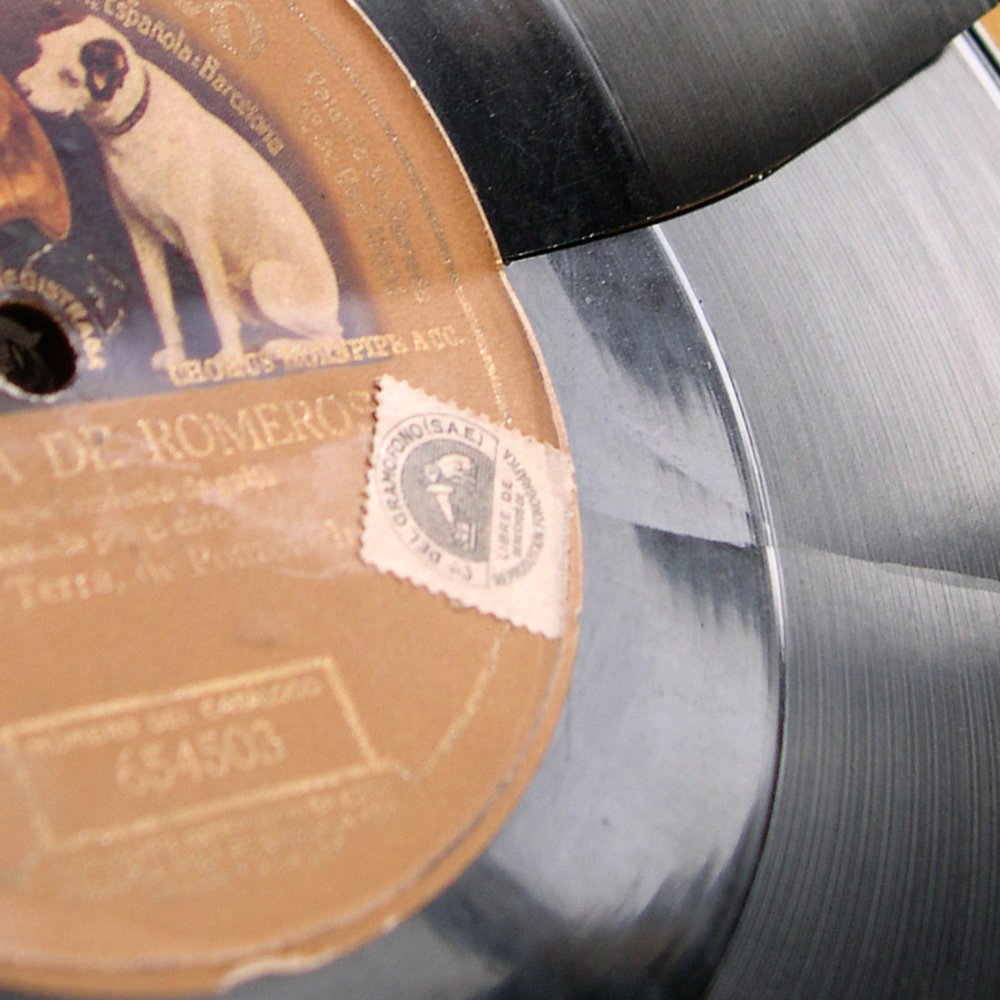
3. Spanish folk song from Navarro, ca. 1940s, cracked in half

Second row (l-r):
1. Asturian folk with gaita, ca. early 1930s, shattered
2. Several Brazilian folk records, ca. late 1940s, in pieces
3. Moroccan music, ca. mid-1940s, broken in half

Third row (l-r):
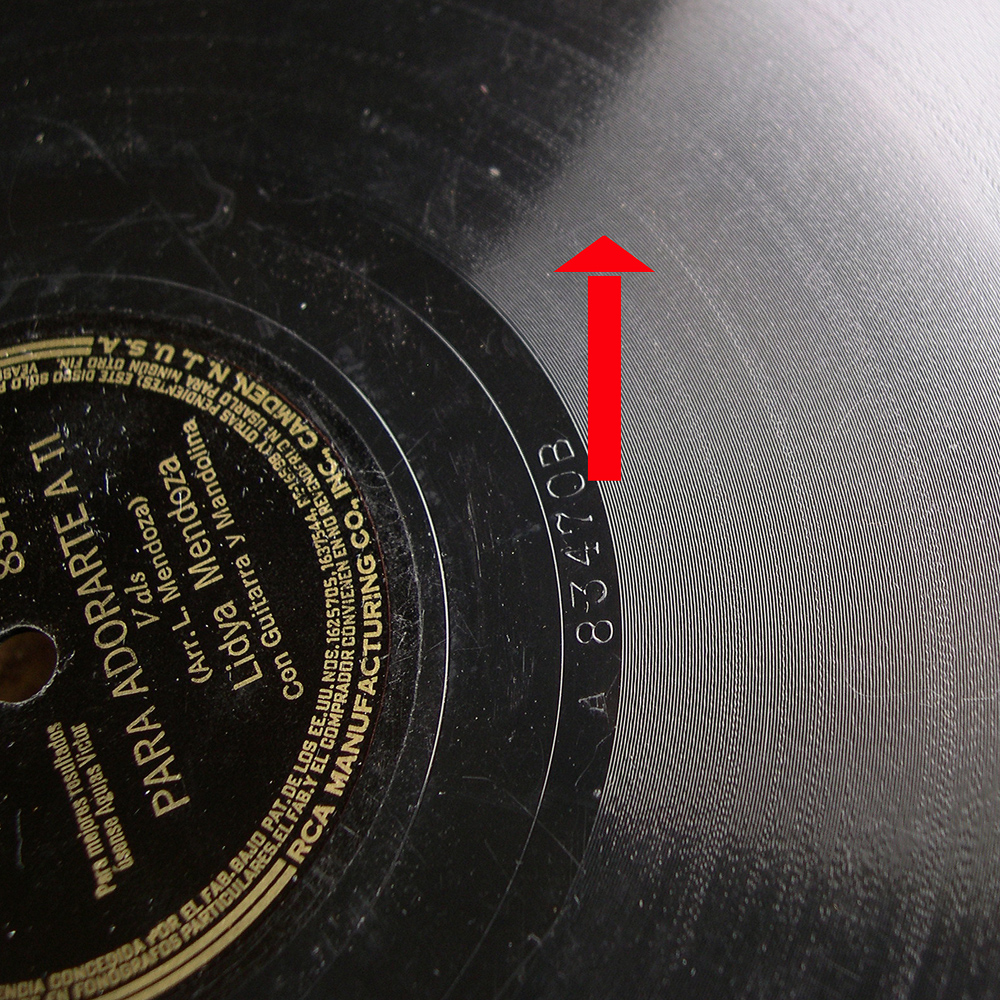
1. Lidya Mendoza record, ca. late 1930s, hairline crack
2. Cousin Emmy country record, late 40s, shattered
3. Canary Islands folk song, ca. 1940s, multiple cracks

Fourth row (l-r):
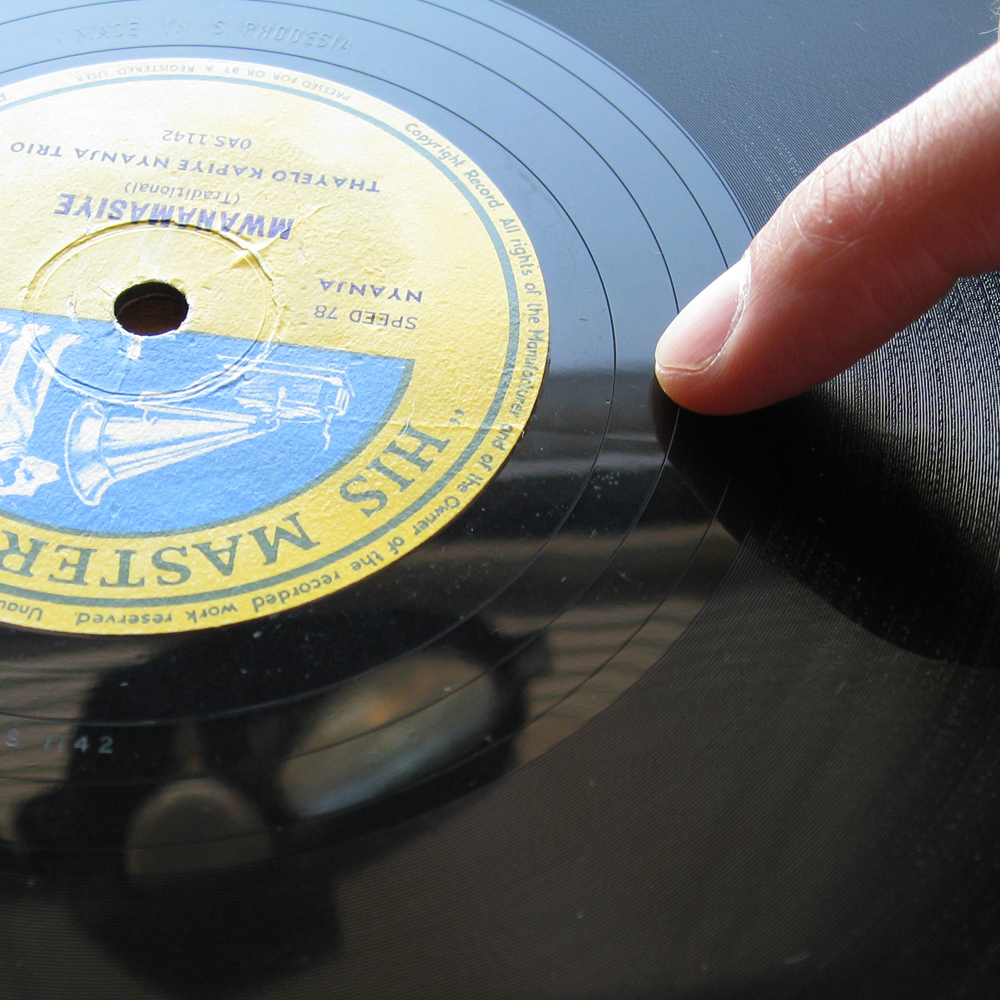
1. Nyanja music from Malawi, ca. 1940s, hairline crack
2. Flamenco by La Nina, ca. 1915-1920, cracked in half
3. Turkish female song, ca. 1928, hairline crack

Fifth row (l-r):
1. North Iranian/Central Asian music, ca. 1930s, in pieces
2. Galician bagpipe record, 1900s, multiple cracks
3. Tahitian music on Mareva label ca. 1940s, hairline crack

And last:
1. Galician bagpipe music, ca. 1910s, multiple cracks

Sam Castandet et son Orchestre Antillais – La Rue Zabyme

There are numerous types of Martiniquan music, but one form that proved quite popular in early recording, even becoming something of a craze, is known as biguine, an orchestrated popular music vaguely similar to calypso or a rhumba, and where the clarinet and trombone have a strong presence. Typically, the clarinet is played with, for lack of a better word, a weepy sound – which you might find similar to the late-1930s Boateng record I posted a while back…an example of direct, cross-Atlantic influence.

Most, if not all, early Martiniquan bands recorded in Paris, beginning from about 1930, when the great Alexandre Stellio began recording for Odeon. Sam Castandet appeared on the scene not soon after, and had a recording career that lasted at least until the 1950s. This track has the typical orchestration for a biguine tune, but is meant to be danced as a mazurka – it was recorded ca. 1940.

Sam Castandet et son Orchestra Antillais – La Rue Zabyme

There are a few nice CDs of early music from the “French Antilles.” Au Bal Antillais on Arhoolie, and Music of Martinique on Flyright are two examples. Another that looks like it may be harder to find is Biguine, Valse Et Mazurka Creoles 1929-1940, released on Fremeaux & Associes.

Technical Notes
Label: Columbia
Issue Number: DF 3358
Matrix Number: CL 8841-1P

Conjunto Medrano – Angel Mio

conjunto_medrano.jpgBack to South America.

In the years before WWII, Victor Records in the U.S. was, for the most part, the largest presence in South America when it came to the distribution and recording of music, as a result of an agreement made with its sister company HMV in England (HMV would essentially have the other continents to record). They also had a pressing plant in Argentina, which was a large market for Victor. That’s not to say there wasn’t competition – Odeon, for example, recorded countless records across the continent, many under the moniker Disco Nacional, and there were a smattering of independents – but Victor had the lock. However, after WWII, independents cropped up where only majors had dared to tread (and barely in many cases). One instance would be the Mendez label in Bolivia, featured in an earlier entry. Another would be Peru’s Sono Radio label, where today’s post hails from.

I’m not sure when Sono Radio began production (it lasted at least until the 70s), but I’m betting this record stems from ca. 1948-1950 or so. According to reader Efrain Rozas, the phrase “Muliza con fuga de Huayno” means that the song begins as a muliza, then ends in the typical Indian huayno style of Peru, with a fuga, a fast section, in the middle. The muliza as a song form was, according to various sources, brought to Peru by Argentine mule drivers (the name muliza comes from mulero, for mule) during the late colonial period (ca. 1760-1810). The Indian huayno sound was incorporated into the music in the mid-20th century and gave the muliza an indigenous quality that it lacked up until then. Another example of older folkloric musical styles being appropriated, adapted, and transformed.

While I could find no information on this fine ensemble (violins, woodwinds, brass, and guitar), I was really taken by the strings. Particulary the break at about 1:20 in the piece.

Conjunto Medrano – Angel Mio

Early recorded music from Andean regions seems to have been largely ignored by contemporary record companies. However, Arhoolie has the fine Huayno Music of Peru, Volume 1, which contains several earlier recordings. There is also this nice site! I would also recommend Fiona Wilson’s article “Indians and Mestizos: Identity and Urban Popular Culture in Andean Peru,” from the Journal of Southern African Studies 26/2 (2000): 239-253.

Technical Notes
Label: Sono Radio
Issue Number: 1046
Matrix Number: ISR-89